


Specifying staircases for listed buildings with British Spirals & Castings
25th November 2026

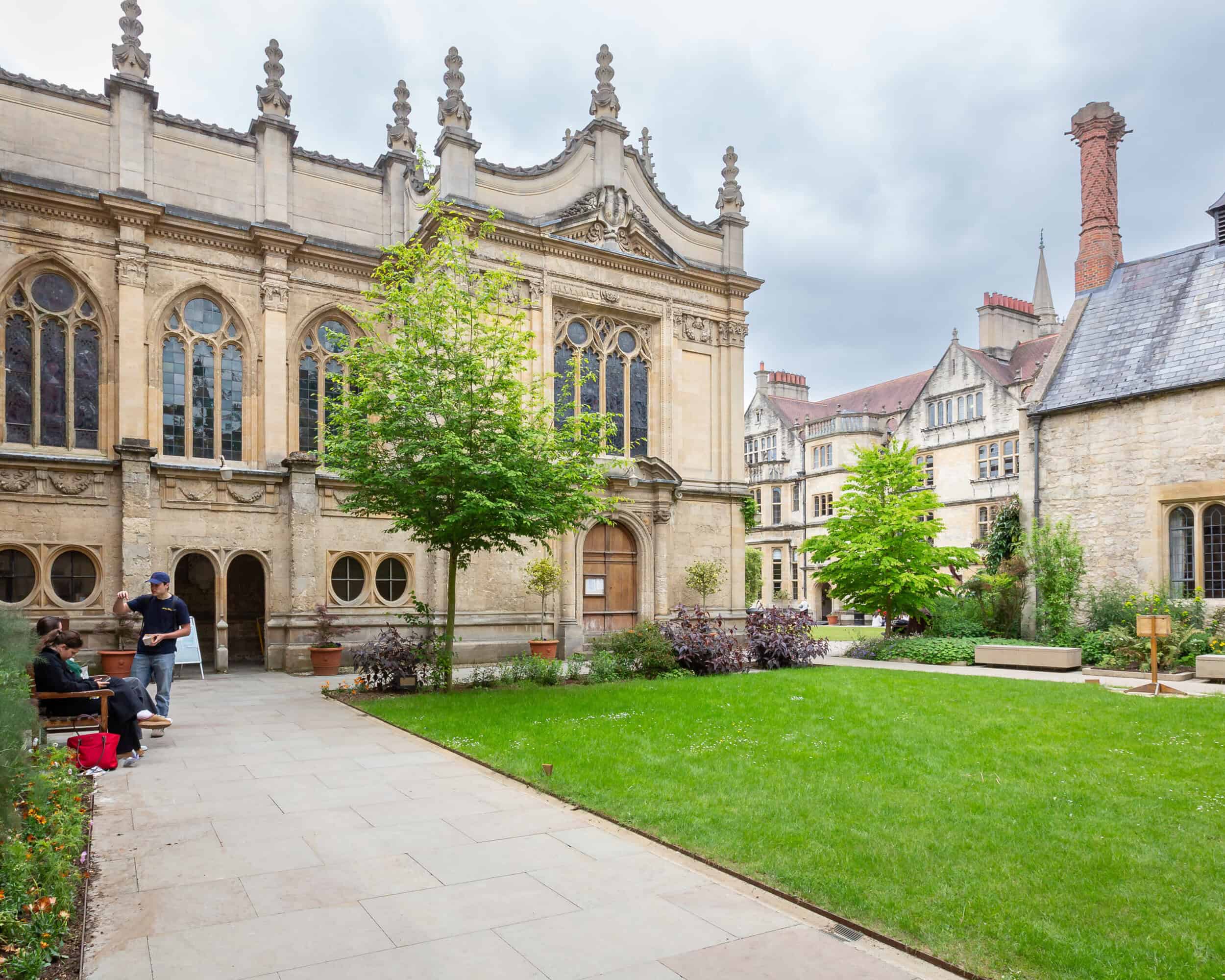
From grand Georgian townhouses to gothic Victorian chapels, listed buildings are an important part of Britain’s architectural history. But, for architects and designers, these buildings present a unique challenge. How do you deliver projects with specific heritage and conservation requirements without sacrificing modern accessibility standards and operational needs?
Staircases sit at the heart of this challenge, serving as significant architectural features that are often central to the building’s historical character. At British Spirals & Castings, we have extensive experience designing and manufacturing bespoke staircases, railings, and architectural metalwork for heritage projects.
Whether you’re designing for the repair of an existing staircase, a replacement for one that has reached the end of its life, or a new staircase that’s being introduced into a historic setting, we can create solutions that respect a building’s history without compromising on quality or function.
Understanding listed building requirements
Usually, before work begins on a listed building, Listed Building Consent is required, especially when alterations impact the building’s historic fabric or architectural character. However, the level of protection depends on whether a building is Grade I, Grade II* or Grade II listed, with higher grades generally requiring greater retention of original materials, detailing, and construction methods.
With staircases being so closely integrated into a building’s original design, any alterations are likely to receive close scrutiny. This is why we always recommend involving your local conservation officer at the earliest possible stage. Early consultation can help establish which elements must be retained, where replacement components may be acceptable and whether alternative materials or construction methods could be considered. It also provides an opportunity to discuss these details before manufacturing work begins.
At British Spirals & Castings, we’re always happy to work alongside architects and project teams during these early discussions, helping to explore the available design options and identify practical solutions that satisfy the requirements of the building.
Replicating historic staircase designs
Historic England’s conservation guidance advocates a minimal-intervention approach, encouraging the retention of historic fabric and, where practical, ensuring alterations are reversible. While we couldn’t agree more, this presents one of the biggest challenges when working in a listed building, as you must ensure that any replacement components remain sympathetic to the original design.
Individual treads, balusters, handrails and newel posts may need to be replicated while retaining significant portions of the existing staircase structure. This is where bespoke manufacturing becomes particularly valuable.
We operate our own foundry in Staffordshire with full pattern-making capabilities. This allows us to manufacture bespoke castings from existing samples, drawings or reference images. Where original components are available, these can be used to develop patterns and moulds for replacement pieces. When replacement is unavoidable, we can use surviving elements, archive drawings, photographs or pattern libraries to produce one-off castings to match existing designs or to create pieces that are sympathetic to the surrounding architecture.\
Choosing the right materials
Material selection is an equally important consideration. In many Grade I listed buildings, conservation requirements mean that materials must be replaced like for like.
However, in some Grade II or II* projects, the requirements can be more lenient. Modern materials such as cast aluminium can closely replicate the appearance of traditional cast iron, while offering reduced weight, rustproofing, and greater manufacturing flexibility for intricate decorative details. We have worked with architects to support successful use of cast aluminium on these heritage projects, including the Brasenose College Chapel at Oxford University.
Our cast aluminium staircases are manufactured at our foundry using traditional greensand casting methods. The result is a staircase that combines the appearance of traditional metalwork with the practical benefits of a much more modern material. But, where cast iron is specifically required, we can also manufacture or supply cast iron components to meet the needs of the specification.
Balancing conservation with modern building regulations
Alongside conversation requirements, architects must also consider how a proposed staircase will meet stricter modern Building Regulations.
Historic staircases were often constructed with steeper pitches, narrower treads, and lower handrails than would typically be permitted in new buildings today. However, where strict compliance would result in unacceptable harm to a building’s heritage significance, the regulatory framework may permit carefully justified departures, subject to agreement with your conservation officer.
For example, modern regulations generally require gaps within staircase balustrades to prevent 100 mm sphere from passing through. However, historic staircases may feature much wider spacing between individual balusters.
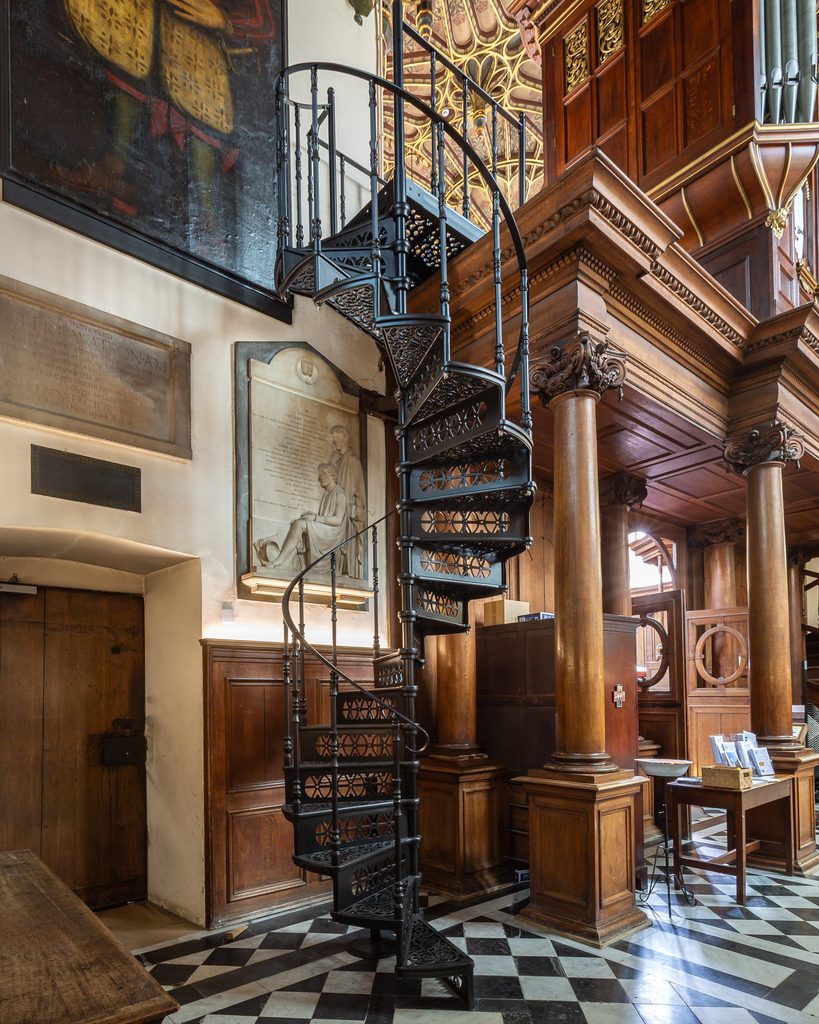
Brasenose College Chapel, Oxford: Commissioned by Lee/Fitzgerald Architects, this bespoke cast aluminium spiral staircase was designed and manufactured by British Spirals & Castings to improve organ maintenance access within the Grade I listed chapel.
Accurate measuring and design
Of course, historic buildings rarely have perfectly square or plumb walls. Over time, buildings settle and structural alterations can introduce further irregularities.
This makes accurate surveying particularly important when designing a bespoke staircase. We use laser scanning to help capture these unique irregularities with precision. The three-dimensional point cloud produced from this scan can prove particularly valuable in complex environments where both floors and walls may be uneven. These elements can all be accurately entered into our CAD modelling processes, ensuring an accurate fit once the staircase is manufactured and delivered.
These digital tools help to complement traditional manufacturing methods rather than replace them. Techniques such as sandcasting continue to provide the authentic texture and detailing expected within heritage sites during the manufacturing process, but modern design tools can help ensure the final structure is exactly as required for the building’s historical significance.
Working with British Spirals & Castings on your next heritage project
Specifying staircases for a listed building involves much more than choosing a suitable style or material. It requires an understanding of conservation principles, careful consideration of historic materials and detailing, and close collaboration between architects, conservation bodies and specialist staircase manufacturers throughout the design and manufacturing process.
By bringing us on board at an early stage in these projects, we can help to navigate design and planning challenges, delivering staircases that respect a building’s historic character while meeting the practical requirements and safety requirements of modern design.
Ready to discuss your project?
Get in touch with British Spirals & Castings to talk through your requirements and discover how our bespoke staircase and metalwork solutions can help bring your projects to life!

